
All Posts
Gen Z Brand Trust: Why Proof Beats Polish
June 29, 2026
Hiebing
)
Key Takeaways from our latest wave of proprietary Gen Z Research
Proof beats polish. Gen Z is more likely to trust brands that show their work than brands that look overly perfected.
AI is useful, but not as the brand. This audience welcomes AI when it helps them make decisions, but becomes skeptical when it replaces creativity, judgment or authenticity.
Credibility comes from verification. Transparent information, real-world proof and trusted personal recommendations carry more weight than influencer gloss or brand-controlled messaging.
For years, marketers operated on a simple assumption: the more polished the brand, the more credible it would feel. As the first true digitally native generation, Gen Z has other ideas. Instead of perfection, they are looking for proof.
Our eighth wave of proprietary Gen Z research reveals a generation that is increasingly skeptical of the signals brands have traditionally relied on to build credibility. AI-generated ads, overly positive marketing and influencer endorsements are all facing a trust deficit.
Across nearly every category we studied—from food and finance to retail and advertising—one theme kept surfacing: polish doesn’t build trust with Gen Z–it triggers scrutiny.
When Perfect Starts Looking Fake
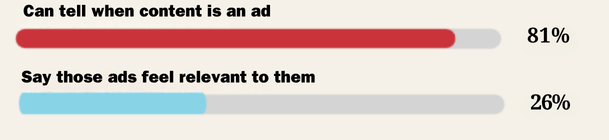
81% of Gen Z respondents said they can tell when content is an ad, with only 26% saying those ads feel relevant to them.
Their heavy social usage has sharpened their filter for anything that feels a little too manufactured. That does not mean they want brands to be careless or low-effort; it means they want content that feels grounded in something true.
In feeds already crowded with content, even well-made advertising has to work harder to earn attention. 58% say too many ads or sponsored posts fill their feeds, and 49% say their feeds are overrun with content they do not want.
That is where polish starts to become a problem. When every image is flawless, every claim is glowing and every message feels engineered for conversion, perfection stops signaling quality and starts signaling dishonest messaging.
The irony? The fatigue does not mean they’re logging off.
56% say they use social media more than they did a year ago, but only 45% say those platforms actually help them relax or decompress. For many, the behavior has shifted from enjoyment to habit. That changes how advertising is received. When social media starts to feel more like a reflex than a reward, interruption becomes easier to resent and harder to trust.
For marketers, the warning is not that Gen Z is unreachable on social; it is that reach without relevance can work against the brand. In this environment, creative has to prove why it deserves the interruption.
That is what makes the rise of AI-generated content so consequential. For an audience already trained to question anything that feels too smooth, AI can either make the brand more useful—or make the sameness easier to spot.
AI Can Help. It Just Can’t Be the Brand.
The nuance is that Gen Z is not rejecting AI outright. In fact, the largest share of respondents say they feel excited and optimistic about the technology overall. They are most open to it when it adds utility: comparing products, evaluating quality and checking pricing to make better purchase decisions.
That distinction matters. AI is welcome when it helps people get to a better answer. It becomes a problem when it starts standing in for the creativity, judgment and point of view people expect from the brand itself.
And Gen Z can tell the difference.
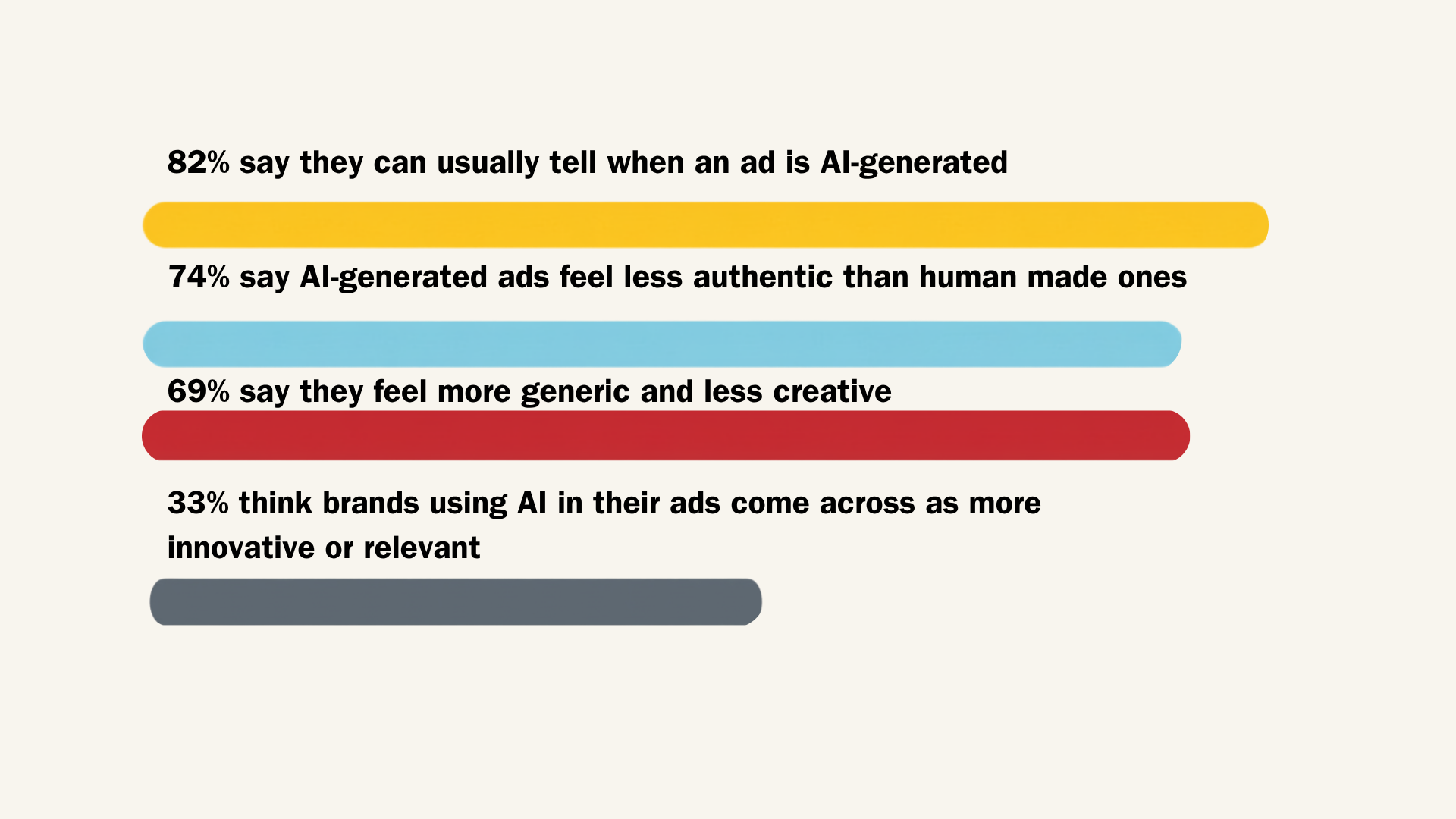 Skepticism leads when it comes to AI creative, 62% say not knowing a brand used an AI-created ad makes them trust that brand less, and 83% want brands to be more transparent about how they use AI. In other words, AI does not get to be invisible anymore. If it is part of the process, this audience expects brands to be clear about where it fits—and where human thinking still leads.
That is why AI-polished creative can create more doubt than desire. When trust in AI-driven marketing sits at the bottom of major brand trust signals—below reputation, ethical behavior and even a brand’s social positions—an obviously automated campaign does not make the brand feel premium. It makes it feel harder to believe. And once polish starts raising questions, the brand has to offer something stronger in its place: proof.
Proof Is the New Premium
That is where authenticity becomes more than a marketing buzzword. For Gen Z, it is a standard of evidence. In category after category, the brands resonating with this cohort are not the loudest or the glossiest. They are the ones making their claims verifiable, make information easier to understand and easier to trust.
In CPG, clear packaging that explains what is inside a product ranks as the strongest trust signal. Even protein-forward claims are met with scrutiny unless the context feels useful and credible.
In banking, 70% chose their bank because of friends or family recommendations, while only 9% were influenced by influencer advertising. Reputation, transparency and trusted guidance matter more than paid placements.
In quick-service restaurants, the food itself drives interest in limited-time offers. FOMO tactics and celebrity tie-ins rank near the bottom.
In retail, physical presence still matters. For a generation raised online, having a physical store remains one of the strongest credibility signals a brand can have. It validates what the website promises.
The pattern is clear: credibility comes from signals Gen Z can see, test or trace. Premium is no longer a feeling a brand can manufacture. It is a conclusion this generation reaches on its own, only after the proof checks out.
What Marketers Should Do Instead
If perfection is losing its power, what should brands do instead? The answers are surprisingly practical.
Lead with transparency, not polish.
Show how things are made. Explain decisions. Be clear about sourcing, pricing, limitations and practices. In this research, transparency works because it gives people something they can verify—not just something they’re asked to believe.Make performance the proof point.
Brand name alone is no longer enough to do the heavy lifting. In a market where many Gen Z consumers believe quality has declined, delivering on the promise is the differentiator.
Use AI to improve decisions, not define the brand.
Use AI where it adds utility—helping people compare products, evaluate quality and make smarter choices. But don’t ask it to become the face, voice or creative judgment of the brand. Invest in earned media, too. GEO discovery is a trust signal.
Turn accountability into visible brand behavior.
Gen Z is paying close attention to whether companies actually do what they say they wil. Commitments matter less than the visible behaviors that back them up. Accountability is no longer a supporting message; it is part of the brand experience itself.
Polish Is the New Risk
For a long time, marketers assumed the safest strategy was to smooth every edge. Gen Z is asking for something else. Perfect no longer reads as professional; it can read as manufactured. Brands looking to build trust and earn market share with this audience will not be the ones that look the most flawless, but the ones that feel the most believable.
Want to build work that Gen Z actually believes? Hiebing can help. Email Nate Tredinnick at ntredinnick@hiebing.com to set up a call.
Subscribe to Marketing Fuel
Sign up for our monthly newsletter, and we’ll send even more real-world inspiration and information straight to your inbox.
)
)
)